
| |
|
Mole
Valley Music |
|
Home | Teachers | Youth Music | Adult Music | Festivals | Grades | Buy, hire, repairs | Theory | Aural | Brass | Downloads | Philip Bishop - Brass Lessons | Double Bass | Acoustic Resonance | |
| Mole Valley Music - brass lessons: trumpet, cornet, etc. | |
Acoustic Resonance - jazz band playing jazz,
latin, blues, cocktail music, dancing for parties, weddings &
functions in Surrey, Sussex, Hampshire, London |
|
MoleValleyMusic.co.uk |
Aural Practice
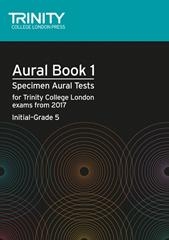
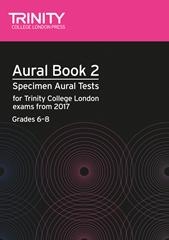
and Aural Books This page provides some help with aural. The sections are laid out for the Trinity Guildhall grades, but the same information can be used for ABRSM grades (but check the intervals required for each ABRSM grade). Aural PracticeTrinity Guildhall produce two books which are excellent for home practice of aural tests. Both come with the exercises both written (to be played by a pianist) and recorded on a CD (for the non-pianist). As well as a wide range of fully-notated sample tests, the books also include information on what the examiner will do, what each question is for, what candidates will be asked to do, hints for candidates, and an answer booklet with 'check yourself' sample answers. The books are:
Beating TimeAlthough now replaced with clapping, the patterns for beating time are useful to know and shown below. Imagine you have a stick in your right hand and at the end of each stroke (where the arrow head is) you strike a bell - this bell is where the beat is.
Interval RecognitionIntervals are the gap between two notes and are based on
the steps of the scale. One of the easier ways to recognise intervals is to
compare them to the first two notes of a well know song. Example songs
are given in the tables below and the Interval
Recognition Sheet (grades 4 and 5 on the second page)
contains the music for some of the songs (and will also playback on
your computer). Note that grades are cumulative so, for example, grade
5 implies you can also recognise grade 4 and grade 3 intervals. When practicing intervals, listen to the two notes
played, sing or hum them and try and match them with the first few
notes of one of the songs listed. Also practice playing and
singing/humming the songs, accurately, memorising the sounds of the
first few notes. With practice, this provides an easy way of
recognising intervals. As well as the Aural practice books and CDs, the Online
Ear Trainer is an excellent tool to practice interval
recognition. Grade 3 Intervals (Trinity Guildhall)
Grade 4 Intervals (Trinity Guildhall)
Grade 5 Intervals (Trinity Guildhall)
CadencesA cadence is a sequence or two (or more) chords, usually used to finish a phrase or piece of music. Listen to the sound of the cadence and compare it to the table below. You can also listen to the bass line which (if the chords are not inverted) will follow the chord progression. For example, for a Perfect cadence in the key of C major, the bass line would go from G (V chord) to C (I chord).
Philip Bishop 01372 454962 / 07950 235329 |
|||||||||||||||||||||||||||||||||||||||||||||||||||||||||||||||||||||||||||||||||||||||||||||||||||||||||
|
Copyright © 2006 Philip Bishop. All rights reserved.